Han

  • Home
  • Business
    • Internet
    • Market
    • Stock
  • Parent Category
    • Child Category 1
      • Sub Child Category 1
      • Sub Child Category 2
      • Sub Child Category 3
    • Child Category 2
    • Child Category 3
    • Child Category 4
  • Featured
  • Health
    • Childcare
    • Doctors
  • Home
  • Business
    • Internet
    • Market
    • Stock
  • Downloads
    • Dvd
    • Games
    • Software
      • Office
  • Parent Category
    • Child Category 1
      • Sub Child Category 1
      • Sub Child Category 2
      • Sub Child Category 3
    • Child Category 2
    • Child Category 3
    • Child Category 4
  • Featured
  • Health
    • Childcare
    • Doctors
  • Uncategorized

How Dare You Settle For Less When The World Has Made It So Easy For You To Be Remarkable?
 September 08, 2018     No comments   


How Dare You Settle For Less When The World Has Made It So Easy For You To Be Remarkable?


Running away?
Think about this metaphor:
If there is no track, you can’t be off track.
Also, recall the analogous scene in Alice in Wonderland in which Alice asks the cat which way she should go and the cat answers: if you don’t care where you end up, it doesn’t matter which way you go.
Let’s say that tracks or ways are goals.
It follows that, without a goal, you can’t go wrong.
Misery only arises after we create the possibility to be off track. Wrong decisions can only occur after we’ve specified a criterion for good and bad tracks, right and wrong ways.
As the Stoic philosopher Seneca put it in yet another metaphor:
“If one does not know to which port one is sailing, no wind is [(un)]favorable.”
Why do we make ourselves vulnerable to going the wrong way, to screwing things up, in the first place?
Why can’t we just be happy?

Let’s play Freud

There are many explanations of why we do something rather than nothing going around that link busyness to psychological struggle.
These theories explain human striving by appealing to unconscious needs. Similar to Sigmund Freud’s philosophy, they maintain that we act like we do because our behavior is governed by mechanisms — troublesome mechanisms — of which we are unaware.
According to one, people chase goals in an attempt to run away from the confrontation with ourselves that an empty calendar would force us to have:
“According to [the French philosopher] Pascal, we fear the silence of existence(…) and we can’t help but run from the problems of our emotions into the false comforts of the mind.” — Zat Rana
We pursue success to flee from our emotions.
Or, we try to achieve things for no other reason than boredom minimization:
We have a hard time having fun in our own company. That’s why people embrace busyness — you don’t realize you are bored when you are running from one place to another.” — Gustavo Razzetti
We want to achieve goals to stop us from realizing that we are, in fact, existentially bored.
Alternatively, ‘the system’ has tricked us into believing that our efforts have any significance:
“One of the greatest triumphs of capitalism: convincing workers that labor is ‘meaningful’”. — Andrew kortina
Topping it all, according to a Dutch article I read recently, “everyone desires a life without goals”.
To throw my cards on the table: I don’t think Freudian explanations apply here and I hate such life philosophies with a passion.
I also can’t help feeling offended by them. When I read the Dutch essay, I got so angry that for the rest of the day people kept asking what had happened.
But let’s not get ahead of ourselves.
To be able to engage with such theories, we need first to understand them.

Why am I still not fulfilled?

Why would someone be convinced that we spend our time running away from ourselves or our boring lives, desiring a life without goals if only capitalism wouldn’t have tricked us?
The arguments for the sweeping claims that “workers”, “people” or “everyone” face(s) this predicament are disapointingly unclear, but the idea is something like this.
Goals condemn one to go through a process where one has an unsatisfied desire, works to satisfy the desire and experiences pleasant but temporary feelings of desire-satisfaction as a byproduct when one reaches the goal.
What follows, is a void:
“This is the inner paradox of goals — they are valuable when we try to accomplish them, but the very act of trying also means that, someday, they will disappear.” — Charles Chu
We cannot withdraw from the cycle of dissatisfaction → labor → goal-achievement and choose to simply stay happy. Whatever destination we reach, there is no such thing as happily ever after. The satisfaction we look for, keeps eluding us.
Even though chasing goals is a fool’s errand, we can’t help ourselves — we need this endless quest to escape our inner demons, we’re in the grip of capitalism, or both.
Deep down, however, we desire a goal-less existence.

Maslow on self-fulfillment

What should we make of this argument?
It’s true that boredom minimization or fear of dread might explain why some people do so so much — the types that can’t sit still or get scared at the thought of meditating.
Furthermore, there is something right in the idea that happiness ever after doesn’t exist, because, having achieved such a peaceful ‘all is well’ state of mind, we would soon find ourselves needing something else to struggle for.
Still, I have a feeling that there’s more to this.
Jumping from (1) the impossibility of eternal fulfillment and (2) the partial relevance of ‘Freudian’ factors to (3) deflationary explanations of human striving overlooks a deep aspect of human nature:
“Contrary to Freudian theories which see sex as the central motive in human behavior, [the German neurologist] Goldstein argues that self-actualization, or the drive to realize one’s full potential, is the more fundamentalmotivation in our lives.” — Nick Wignall
As Goldstein predicted, psychological research finds that self-actualization is an essential reason why people do something rather than nothing.
Consequentially, in his hierarchy of human needs, the American psychologist Abraham Maslow famously posits self-actualization — achieving one’s full potential — as the highest of human wants.
If correct, people have the desire to become everything that they are capable of becoming:
“Man is meant to be busy. But busy on certain types of things. There is not supposed to be some distinction between work and not work. It’s all supposed to be work…and none of it is supposed to feel pointless or soul-crushing.” — Ryan Holiday
Asserting, by contrast, that everyone who’s working towards something does so to escape oneself sounds like an unjustified generalization of your own case:
Saying you won’t try to achieve *insert goal here* because achieving goals is actually *insert Freudian explanation here* is actually you just building an excuse when you fail (paraphrase from Tom Kuegler).
People need to stop making up stories about people who work a lot being tricked by capitalism or having psychological issues — it’s (mostly) untrue and quite offensive.
So when you’ve abandonded your cynic friends, join team self-improvement. We are rooting for you and want you to make a ruckus and think that you should take your responsibility:
“How dare you settle for less when the world has made it so easy for you to be remarkable?” -Seth Godin

Read More
  • Share This:  
  •  Facebook
  •  Twitter
  •  Google+
  •  Stumble
  •  Digg

Visual Guide to Binge Eating Disorder

 August 26, 2018     No comments   


woman taking bite

What Is Binge Eating Disorder?

Binge eating disorder isn't the same as occasional overeating. Plenty of people eat too much once in a while. Who hasn’t had a stomachache after a huge Thanksgiving dinner? People with this eating disorder, though, feel compelled to do so on a regular basis -- at least once a week over a period of 3 months or longer.

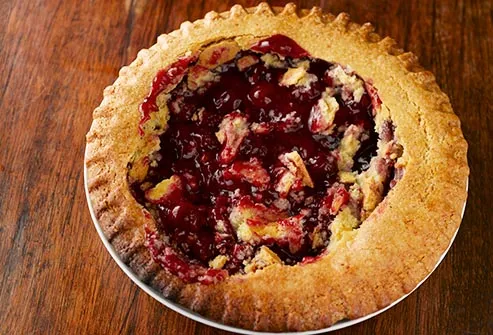
remains of cherry pie

Feeling Distressed

People who have binge eating disorder feel they can't control how much or even what they're eating. They often eat alone, until they feel sick, or when they’re not hungry. Guilt, shame, disgust, or sadness come after the binge. People may feel so embarrassed about their behavior that they go out of their way to hide it from friends and family.
sneaking food

It's Different From Bulimia

Bulimia and binge eating disorder aren't the same, although they share some symptoms. People with bulimia also regularly overeat, and they may feel the same negative emotions, such as a loss of control, shame, or guilt. The key difference is that people with bulimia "purge" afterward. They might make themselves vomit, use laxatives or diuretics, or exercise too much. Purging is not part of binge eating disorder.
infographic of binge eating disorder risk

Who Is at Risk?

Anyone can develop binge eating disorder, regardless of race, sex, age, or weight. It’s believed to be the most common eating disorder in the U.S. Although women are slightly more likely to have it, men can also get it. More than 6 million Americans -- 2% of men and 3.5% of women -- will have this condition at some point in their lives. Men are more likely to have it in middle age. Among teens, 1.6% have binge eating disorder.
man measuring waist
Many people who develop binge eating disorder also struggle with their weight. Among people with the disorder, about two-thirds are obese, and one study found that as many as 30% of people who seek weight-loss treatment may also have it. People who are overweight or obese are also at risk for related health issues like heart disease, high blood pressure, and type 2 diabetes.
woman hiding face

It's About Mental Health

Many people with binge eating disorder also have other emotional or mental health problems, such as depression, anxiety, bipolar disorder, and substance abuse. They may also feel stressed, have trouble sleeping, and struggle with low self-esteem or body image shame.
neon EAT sign

What Causes Binge Eating Disorder?

Experts aren’t sure exactly what causes eating disorders. A mix of factors, including a person's genes, psychology, and background, may be involved. Dieting can lead to binge eating disorder, but we don't know whether that alone can trigger it. Some people may be extra sensitive to food cues, such as smells or images of food. The disorder can also result from stressful or traumatic life events, such as the death of a loved one or being teased about weight.
counseling session

Recovery Is Possible

If you think you might have binge eating disorder, know that it can be successfully treated. The first step is getting a diagnosis. To do that, a doctor or other health professional will give you a physical exam and ask questions about your eating habits, emotional health, body image, and feelings toward food.
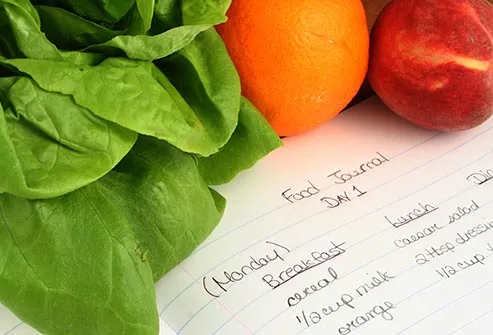
food diary

Treatment: Help With Thoughts, Feelings, and Food

Talking with a psychiatrist or other counselor is key in working on emotional issues. Cognitive behavioral therapy (CBT) aims to change the negative thought patterns that can spark binge eating. Interpersonal therapy (IPT) addresses relationship problems that may be involved. It also helps to work with a nutritionist to learn healthy eating habits and keep a food diary as you're recovering.
pills in hand

What About Medication?

Certain medications, such as antidepressants and specific anti-seizure drugs that can help control food cravings and urges to binge, may be useful when used along with counseling. Vyvanse (lisdexamfetamine), a medication used to treat ADHD,  is the first drug to be approved by the FDA to treat binge eating disorder. It is not clear how the drug works, but studies have shown that Vyvanse is able to help reduce the number of binge days per week. 
medical scale

Losing Weight With Binge Eating Disorder

Binge eating can lead to weight gain and make it tough to shed extra pounds and keep them off for good. As part of their treatment, people with binge eating disorder may need help with that. Traditional weight loss programs may help, but some people struggle with strict  diets. Ask your doctor whether you could benefit from a specialized weight-loss program for people with eating disorders. 
woman eating icecream

Prevention

If you're at risk for binge eating disorder, you can take action to avoid getting it. Watch for feelings such as, guilt, shame, or being impulsive around food, or having low self-esteem. If you have these kinds of issues, or if eating disorders run in your family, talk to a doctor or a therapist.


Read More
  • Share This:  
  •  Facebook
  •  Twitter
  •  Google+
  •  Stumble
  •  Digg

You Are Not Equal. I’m Sorry.

 August 25, 2018     No comments   

You Are Not Equal. I’m Sorry.


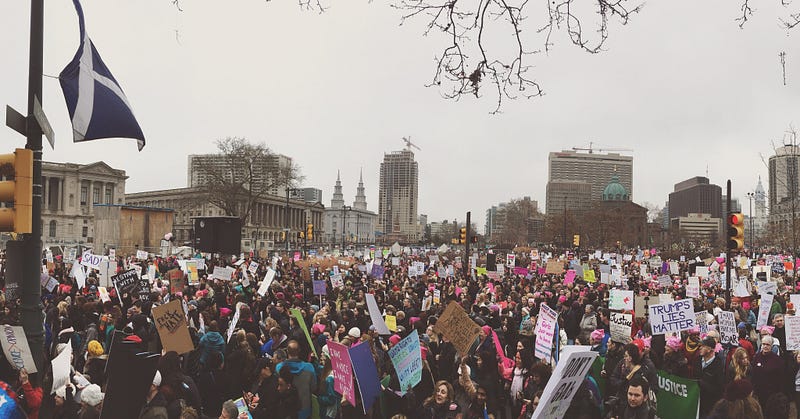
(A post is making rounds on social media, in response to the Women’s March on Saturday, January 21, 2017. It starts with “I am not a “disgrace to women” because I don’t support the women’s march. I do not feel I am a “second class citizen” because I am a woman….”
This is my response to that post.)

Say Thank You

Say thank you. Say thank you to the women who gave you a voice. Say thank you to the women who were arrested and imprisoned and beaten and gassed for you to have a voice. Say thank you to the women who refused to back down, to the women who fought tirelessly to give you a voice. Say thank you to the women who put their lives on hold, who –lucky for you — did not have “better things to do” than to march and protest and rally for your voice. So you don’t feel like a “second class citizen.” So you get to feel “equal.”
Thank Susan B. Anthony and Alice Paul for your right to vote.
Thank Elizabeth Stanton for your right to work.
Thank Maud Wood Park for your prenatal care and your identity outside of your husband.
Thank Rose Schneiderman for your humane working conditions.
Thank Eleanor Roosevelt and Molly Dewson for your ability to work in politics and affect policy.
Thank Margaret Sanger for your legal birth control.
Thank Carol Downer for your reproductive healthcare rights.
Thank Margaret Fuller for your equal education.
Thank Ruth Bader Ginsburg, Shannon Turner, Gloria Steinem, Zelda Kingoff Nordlinger, Rosa Parks, Angela Davis, Malika Saada Saar, Wagatwe Wanjuki, Ida B. Wells, Malala Yousafzai. Thank your mother, your grandmother, your great-grandmother who did not have half of the rights you have now.
You can make your own choices, speak and be heard, vote, work, control your body, defend yourself, defend your family, because of the women who marched. You did nothing to earn those rights. You were born into those rights. You did nothing, but you reap the benefits of women, strong women, women who fought misogyny and pushed through patriarchy and fought for you. And you sit on your pedestal, a pedestal you are fortunate enough to have, and type. A keyboard warrior. A fighter for complacency. An acceptor of what you were given. A denier of facts. Wrapped up in your delusion of equality.
You are not equal. Even if you feel like you are. You still make less than a man for doing the same work. You make less as a CEO, as an athlete, as an actress, as a doctor. You make less in government, in the tech industry, in healthcare.
You still don’t have full rights over your own body. Men are still debating over your uterus. Over your prenatal care. Over your choices.
You still have to pay taxes for your basic sanitary needs.
You still have to carry mace when walking alone at night. You still have to prove to the court why you were drunk on the night you were raped. You still have to justify your behavior when a man forces himself on you.
You still don’t have paid (or even unpaid) maternity leave. You still have to go back to work while your body is broken. While you silently suffer from postpartum depression.
You still have to fight to breastfeed in public. You still have to prove to other women it’s your right to do so. You still offend others with your breasts.
You are still objectified. You are still catcalled. You are still sexualized. You are still told you’re too skinny or you’re too fat. You’re still told you’re too old or too young. You’re applauded when you “age gracefully.” You’re still told men age “better.” You’re still told to dress like a lady. You are still judged on your outfit instead of what’s in your head. What brand bag you have still matters more than your college degree.
You are still being abused by your husband, by your boyfriend. You’re still being murdered by your partners. Being beaten by your soulmate.
You are still worse off if you are a woman of color, a gay woman, a transgender woman. You are still harassed, belittled, dehumanized.
Your daughters are still told they are beautiful before they are told they are smart. Your daughters are still told to behave even though “boys will be boys.” Your daughters are still told boys pull hair or pinch them because they like them.
You are not equal. Your daughters are not equal. You are still systematically oppressed.
Estonia allows parents to take up to three years of leave, fully paid for the first 435 days. United States has no policy requiring maternity leave.
Singapore’s women feel safe walking alone at night. American women do not.
New Zealand’s women have the smallest gender gap in wages, at 5.6%. United States’ pay gap is 20%.
Iceland has the highest number of women CEOs, at 44%. United States is at 4.0%.
The United States ranks at 45 for women’s equality. Behind Rwanda, Cuba, Philippines, Jamaica.
But I get it. You don’t want to admit it. You don’t want to be a victim. You think feminism is a dirty word. You think it’s not classy to fight for equality. You hate the word pussy. Unless of course you use it to call a man who isn’t up to your standard of manhood. You know the type of man that “allows” “his” woman to do whatever she damn well pleases. I get it. You believe feminists are emotional, irrational, unreasonable. Why aren’t women just satisfied with their lives, right? You get what you get and you don’t get upset, right?
I get it. You want to feel empowered. You don’t want to believe you’re oppressed. Because that would mean you are indeed a “second-class citizen.” You don’t want to feel like one. I get it. But don’t worry. I will walk for you. I will walk for your daughter. And your daughter’s daughter. And maybe you will still believe the world did not change. You will believe you’ve always had the rights you have today. And that’s okay. Because women who actually care and support other women don’t care what you think about them. They care about their future and the future of the women who come after them.
Open your eyes. Open them wide. Because I’m here to tell you, along with millions of other women that you are not equal. Our equality is an illusion. A feel-good sleight of hand. A trick of the mind. I’m sorry to tell you, but you are not equal. And neither are your daughters.
But don’t worry. We will walk for you. We will fight for you. We will stand up for you. And one day you will actually be equal, instead of just feeling like you are.


Read More
  • Share This:  
  •  Facebook
  •  Twitter
  •  Google+
  •  Stumble
  •  Digg

Everything You Ever Knew is Wrong

 August 25, 2018     No comments   

Everything You Ever Knew is Wrong


s I was growing up, I believed the United States was the best country on the planet. Boundless opportunities awaited anyone not afraid of hard work, and justice always prevailed thanks to our sacred Constitution.
As the generous benefactor of less prosperous nations and a beacon of excellence for the entire world to emulate, we were the bearers of light and hope to the entire world.
Being born in the USA was akin to hitting the reincarnation lottery. You, the average American citizen, are envied by all. Freedom! Democracy!
That’s what I believed because that’s what I was taught by every adult in my life. Why wouldn’t I believe it? Hell, why wouldn’t they believe it? It’s all they’d been fed their entire lives too. American awesomeness was merely the natural order of things. You didn’t have to question it, you just knew it, and accepted it.
God was in Heaven, and Heaven was called America.
And all was well.
Until at some point in your life (if you’re paying attention at all) the truth hits you as violently as an anvil on Wile. E. Coyote’s head in a Roadrunner cartoon.
You may already have known the whole system was an elaborate lie since you were a kid. I’m in that camp myself. Reading voraciously and idolizing John Lennon had me radicalized by fifteen. Many others share similar experiences of the truth starting to gradually dawn on them.
But then there is that precise moment when some giant, hideous truth bomb bitch slaps you, and you’re never the same again. No preamble, no advance warning.
In a split second, you realize everything you ever knew is wrong. As the proverbial glowing light bulb hovers over your head, you see right through the window dressing and propaganda to the face of the beast.
It could have been Vietnam, Watergate, Iran Contra, 9/11, Iraq, Standing Rock, Pussy Grabbing — whatever. There are as many catalysts as there are disillusioned people, and then some. What’s happening here is the domino effect of one great truth opening the floodgates, and all the pieces suddenly falling into place.
It goes something like this:
We are not the greatest country in the world in 2018. We are a mouth-breathing, universally despised global bully. Bringing freedom and democracy is code for invading innocent countries for their resources. Everyone seems to know that but us.
But what can you expect from a nation that doesn’t even take care of its own? Millions die as a direct result of poverty so a handful of oligarchs can lead lives of unimaginable luxury. We don’t even want to keep our people healthy or educate our kids adequately.
You can’t even get ahead by being smart and driven anymore. If you’re among the lucky few who manage to attend college, all you have to look forward to is an insultingly low paying job that won’t even put a dent in all those student loans.
This is what we’re expected to be proud of and swear undying allegiance to? Are we supposed to mindlessly embrace the false narrative of what America was and is?
Because this is not the greatest country in the world by any objective reckoning. In fact, it’s not even a great country at all, or even a good one, no matter what we’ve been indoctrinated to believe.


Read More
  • Share This:  
  •  Facebook
  •  Twitter
  •  Google+
  •  Stumble
  •  Digg

The Top Pop Song Of All Time

 August 25, 2018     No comments   


This is a post that explains the methodology I use in compiling my top 75 pop songs of all time. For my philosophical defense of pop music, see here:
Words like “greatest” and “best” imply the use of an objective standard. In reality, when it comes to judging music, it’s not possible to eliminate subjective considerations. This is especially true when one defines pop music as I have: an auditory artform intent on producing the most pleasurable sound possible.
Sometimes definitions are uninteresting. This one is really important. I take pop music to fundamentally be a striving toward pleasure, and a particular kind of pleasure at that. Epicurus’ hedonism famously endorsed a serene, longer-lasting kind of happiness. Pop music, by contrast, is built to immediately please; built for enjoyment in the now — what happens later be damned.
In my philosophy of pop music piece, I expound on the above in more detail.
Here’s an important question for me to resolve: Are the songs I’ve chosen in the end just my “favorites”? Or does this list actually pretend to carve out what the greatest songs are? When it comes to pop music, I’m not sure that distinction is a meaningful one.


Although pop is amorphous, on this list I’ve tried to chase a certain sound. As spectacular as “Gimme Shelter” and “Atlantic City” are, they were excluded. I won’t spell out the conditions for eligibility, since my criterion for pop excellence is fundamentally a feeling and not an easily-specifiable characteristic, but hopefully it’s enough to say I’m allowing songs whose overriding goal seems to be to produce the most pleasurable sound possible.


There is a musical sweetness I’m looking for. This is methodologically imprecise, of course, but we’ll be all right.
One last example that I think helps explain my approach. Sam Cooke’s “A Change Is Gonna Come” is musically beautiful, but the longing it captures is subversive to the targeting of pleasure; the optimism built into the song is tempered by the social realities Cooke is lamenting. Had Cooke sought to eliminate this wistfulness and approach the song along the lines of the pop standard I gave above, it would betray the artistic vision of the song. This isn’t a failure of the song but an illustration that pop doesn’t just mean anything that has a chorus and is musically beautiful.

I’ve chosen to cap the number of entries at two per artist. We could populate the entire list with just Beatles and Beach Boys songs, and it would solidly represent some of the best pop music ever produced. Yet where’s the fun in that?
Ready for the list? To see it, go here.


Read More
  • Share This:  
  •  Facebook
  •  Twitter
  •  Google+
  •  Stumble
  •  Digg

Collusion? It Could Be Worse

 August 25, 2018     No comments   

Collusion? It Could Be Worse

Some Trump supporters justify collusion on the grounds that it has kept Democrats from political power


July’s NBC News/Wall Street Journal poll revealed that President Trump’s approval rating rose to 45 percent — up a point from June’s survey — at the very moment the president was meeting with Russian President Vladimir Putin in Helsinki.
That mark matched Trump’s highest approval rating ever.
In the current wall-to-wall media environment, July 16 was a long time ago, so let’s review what happened. At the summit, Trump sided with Moscow rather than our own intelligence community on the question of interference in the 2016 election, offered to allow the Russians to question former Ambassador Michael McFaul and other Americans, and then genially suggested a follow-up meeting. He blamed the worsening relationship between the U.S. and Russia on the Americans, specifically citing Special Counsel Robert Mueller’s investigation, calling it a “witch hunt” in the process.
On Russian interference in the election, Trump said, “President Putin says its not Russia. I don’t see any reason why it would be.” Perhaps most amazingly, a day after the summit, Trump walked back this “would” and suggested it should have been a “wouldn’t.” As Matt Flegenheimer described the scene for the New York Times:
It was really just a mix-up, [the president] insisted. Like confusing “affect” and “effect,” but for unprecedented global cyberaggression. …
“The sentence should have been, ‘I don’t see any reason why it wouldn’t be Russia,’” Mr. Trump said. “Sort of a double negative.”
Certainly, those who cried “treason!” might do well to reread their high school civics textbook. (The bar, they might note, isn’t low!) But that doesn’t make Trump’s behavior any less troubling — or the uptick in Trump’s approval rating any less ominous. It gives credence to the Public Policy Polling survey last year which found that 79 percent of Trump voters would continue to support the President even if it were proved that he colluded with Russia to win the election.
Would these Trumpistas support him even if Mueller uncovered bona fide treasonous actions performed by Trump himself? The above polls suggest that, in fact, they would.
Allow me to outline the implications of this situation in the clearest language available to me. These polls don’t mean that 45 percent of Americans are so pleased with Trump as a president that they would follow him and let the country go to hell, and the polls don’t mean that Trump supporters need a better media narrative to see the truth about their hero. CNN reports about Trump almost never change hearts and minds on the right.


(Credit: Jeremy Pelzer)

The truth is even worse. These polls indicate that those who support Trump would rather (1) undermine the electoral process of our democracy, (2) disrupt our relationship with our allies and the international order, and, perhaps, even (3) imperil the future of the United States itself than allow the Democratic Party control of the country. It means that Trump supporters trust those who were our most bitter enemies more than their own fellow citizens.
How has this mistrust been sown? Why are the tectonic plates undergirding our society under such extraordinary pressure? Is it because people increasingly spend time only with those of their political tribe? Could social media and the decreasing social capital of many in this country play a role?
But if we stop here, we won’t have explained the content of this mistrust; that is, we won’t have explained why the #MAGA crowd believes the Democratic plan for America is so incomparably terrible.
One finds a partial explanation in Jonathan Haidt’s 2013 book The Righteous Mind. Here Haidt, a social psychologist, applied what his field calls moral foundations to American politics. For Haidt, there are six foundations: care/harm, fairness/cheating, loyalty/betrayal, authority/subversion, sanctity/degradation, and liberty/oppression. (Other social psychologists only use the first five.) Yet Haidt found that liberals typically answer moral questions by appealing to only two of them, care/harm and liberty/oppression. Conservatives, by contrast, appeal to all six.
This insight helped Haidt, himself a liberal, account for the results of a study where he asked liberals, moderates, and conservatives about one another’s answers to a range of political and moral questions. In that study, conservatives and moderates could predict the liberals’ answers fairly accurately. But the further left the liberal, the worse he or she was at predicting conservatives’ positions. Specifically, liberals assumed that conservatives didn’t care about those who were harmed by bad social policies, political events, or oppression — and were consistently wrong on that count.
If Haidt is right that conservatives are often misunderstood by liberals, we should note that their misunderstanding is specifically about morality. What is the content of this misunderstanding about morality?
According to Haidt, it is twofold. First, the data indicate that liberals think conservatives care less than they actually do about others (though they are right about libertarians). Second, conservatives think that liberals ignore or purposely flout loyalty, sanctity, and authority — and the data says they’re right.
So, we might infer, from a conservative perspective, liberals are prone to protecting people and groups from conservative callousness who many not really need to be protected, punishing conservatives for harming people who weren’t actually harmed (at least, by conservative politics), and destroying the moral underpinnings of the social order. This, in turn, leads to mistrust — enough mistrust to have warmer feelings for Vladimir Putin than for Hillary Clinton.
Like Haidt, I find myself on the left on the vast majority of issues. I want single-payer, NHS-style health care and speak often about the destructive nature of capitalism. I support Black Lives Matter and #MeToo. Above all, I want immediate action on behalf of the undocumented. I think conservatives are wrong on these issues for a whole host of reasons.
Yet after reading Haidt, I think I understand why conservatives have come to fear the left so much. First of all, the left shapes the culture, and we do, after all, have a culture war on our hands. Repeated studies have shown that Republicans are an endangered species in both academia and the media. And evangelical Christians, the bedrock constituency of the Republican Party, are nowhere to be found in culture-shaping fields. In a subculture already rife with narratives about persecution, it’s a very short step for many evangelicals to begin to suspect that all this isn’t, shall we say, accidental.
Further apparent evidence that their marginalization within these culture-defining spheres isn’t accidental arises when the media seems to intentionally target these excluded groups. Two examples will demonstrate the pattern.
Exhibit A: In the wake of the Orlando Pulse night club shooting — the massacre in which Omar Mateen murdered 49 people and pledged allegiance to ISIS? — the conservative outlet National Review ran an article listing major media sources, including CNN’s Anderson Cooper and the New York Times’editorial board, who had not-so-subtly blamed orthodox Christians for the attack. Incredibly, other liberal alt-media explicitly blamed Christians for the attack. Talk about alternative facts!
Exhibit B: Chick-fil-A. Remember in 2012 when Chicago and Boston (followed by several universities) tried to bar Chick-fil-A from expanding or opening new stores in their cities? Toronto, the mayor of San Francisco, and a would-be mass shooter targeting the Family Research Council also got involved. (His goal was to “kill as many people” as possible, then “smear a Chick-fil-A sandwich on their face.”)
Most of these actions should either be categorized as First Amendment violations or attempted murder. But only conservatives seem to remember that all this was precipitated by comments Chick-fil-A president Dan Cathy made as a private individual. Chick-fil-A has never discriminated in hiring or otherwise against LGBT people. The uproar was caused solely by Cathy’s private opinion, which he had the gall to voice in public.
Obviously conservatives, and particularly evangelicals, have some soul-searching to do, especially after more than 80 percent of evangelicals who voted — and voter turnout was high — pulled the lever for Trump.
Many orthodox Christians have defended the (theologically) indefensible, and others have failed to call out vigorously enough racist and homophobic attitudes. They most certainly cannot hold themselves guiltless.
But neither should liberals. At some point those on the left in this country crossed the Rubicon to grasp absolute cultural power and in doing so changed the cultural make-up of America, perhaps forever. They ceased to encourage their fellow Americans to leave behind racist attitudes, misogyny, and homophobia and began weaponizing those words, attributing such attitudes to everyone who disagrees with them. Their strategy of cultural Realpolitik has come to involve the aggressive social marginalization of certain groups, particularly evangelicals and conservative Catholics.
Something’s got to give. Cultural seismographs everywhere indicate an earthquake is coming. Already the primary enemy for many conservatives is not an ideology or foreign power, even if that power has tampered with our elections and bribed or blackmailed our president. Today, for many on the right, the primary enemy is their own countrymen, who they believe wish them harm.
If there’s anything more dangerous for America than our president colluding with a foreign power, this is it.

Read More
  • Share This:  
  •  Facebook
  •  Twitter
  •  Google+
  •  Stumble
  •  Digg
Newer Posts Older Posts Home

Pages

  • Home

Popular Posts

  • Exploring Mount Fuji: A Visitor's Guide
    Exploring Mount Fuji: A Visitor's Guide Mount Fuji - or Fuji-san in Japanese - is the highest peak in the Fuji volcanic cha...
  • The Little Mermaid (2018)
    The little Mermaid(2018)                                                                 >>Download Here<<<
  • Origins of Theravada Buddhism
    Origins of Theravada Buddhism  Buddhist monks view an ancient temple with stupas (pagodas) at Bagan, Mandalay Region, Burma (Myanmar). ...

Recent Posts

About Yangon

Blog Archive

  • August 2018 (23)
  • September 2018 (4)
  • October 2018 (9)

About Us

  • Contact Us
  • Terms of Service
  • Privacy Policy

Copyright © Han | Powered by Blogger
Design by Hardeep Asrani | Blogger Theme by NewBloggerThemes.com